.jpg)
East Java Indonesia: Yogyakarta, Malang, Bromo, Ijen

This 5-day East Java itinerary mixes ancient temples, volcanic adventures, and natural wonders. You'll catch sunrise at 8th-century Borobudur, chase waterfalls, witness blue flames at 2am, and stand on the rim of an active volcano.
Temples → Waterfalls → Volcanoes. Let me tell you, this circuit is unreal.
In This Post
├─ Days 1-2: Yogyakarta's Ancient Temples
├─ Day 3: Tumpak Sewu Waterfalls
├─ Day 4: Mount Bromo Sunrise
├─ Day 5: Ijen's Blue Flames
└─ Tips, Booking Links, Mistakes & Practical Info

☀️ Seasonal note: We visited in October. Shoulder season = perfect weather. Wet season (Nov-Mar) can be cloudy, but you'll have way fewer crowds.
Day 1-2 : Yogyakarta’s Hidden History
Yogyakarta is Java's cultural heart. Ancient temples, awe-inspiring architecture, and Javanese traditions waiting to be discovered.
Day 1: Sumur Gumuling, Taman Sari Castle and City Walk
Full disclosure: Our flights were delayed (classic Indonesian airline move), so we had to skip Day 1. But here's what we planned—and what you should do if you have the time.
Sumur Gumuling :
Inside Taman Sari Water Castle
Opens: 9am-3pm (arrive early to beat crowds)
Unique circular architecture, stunning photo ops
Sumur Gumuling Taman Sari Water Castle
After this, walk Yogyakarta's streets. The city is covered in vibrant graffiti—some of the best street art we've seen in Southeast Asia. Prawirotaman Street has great cafés and live music in the evening.
Day 2: Borobudur and Prambanan Temples
Borobudur Temple
Wake up stupid early. I'm talking 3:30am. But trust me—watching sunrise from Borobudur is worth every yawn.
📍 QUICK FACTS Location: 1.5 hours from Yogyakarta Sunrise slot: 5:30-6am Duration: 1-2 hours Tickets: Ground floor only OR full access 💡 TIP: Book your ticket online in advance. Slots sell out on weekends and holidays. The "full access" ticket lets you climb to the top—100% worth it. |
Built in the 8th century, Borobudur is the world's largest Buddhist monument. It was abandoned in the 15th century, buried under ash and jungle, then rediscovered in the 1800s. Some pieces are still being restored today.
The temple sits between two active volcanoes—Mt. Sundoro-Sumbing and Mt. Merbabu-Merapi. When the morning light hits those ancient stones, you'll get it.
Over 1.6 million blocks of andesite - a volcanic rock - were used in Borobudur's construction.

After Borobudur, grab a snack. You'll need fuel for Prambanan.
Prambanan Temple
This 9th-century Hindu temple complex honors the divine trinity: Brahma, Vishnu, and Shiva. Three main temples, stunning architecture, intricate stone carvings everywhere.


The Legend: Roro Jonggrang, a clever princess, tricked an evil king who wanted to marry her. She challenged him to build 1,000 temples in one night. With supernatural help, he almost did it. To stop him, she created a fake dawn. The demons fled. The king turned her into a statue—now part of Prambanan.
Real or not? Who knows. But it makes the temple even cooler.
Evening in Yogyakarta:
Head to Prawirotaman Street. Backpacker central, vibrant cafés, incredible live music. The perfect way to wind down before your overnight train to Malang.
🚂 Train tip: Book the overnight train Yogyakarta → Malang online. 6-hour journey. We took the night train, arrived at 3am, freshened up at our hostel, then started the Bromo-Ijen tour at 6am.
Day 3: Malang - Tumpak Sewu Waterfalls
Your Bromo-Ijen pickup happens early—5am or 6am. However, the tour operator are flexible and accomodate to slight delays. We needed some time to freshen up at our hostel in Malang before our tour pickup due to delayed flights and continuous journeys. We started our tour at 6am instead of 5am. So don't stress if you're running late!
First stop on your Bromo - Ijen Tour is the magnificent Tumpak Sewu waterfall.
Tumpak Sewu Waterfalls
📍 QUICK FACTS Drive from Malang: 2 hours Hike down: 30-45 min (steep!) Time at falls: 2-3 hours Difficulty: ⭐⭐⭐ Challenging Bring: Waterproof shoes, water 💡 TIP: Moderate fitness required. Wear waterproof sandals or hiking shoes. They WILL get soaked. The climb back up is tougher than going down—pace yourself. |
Tumpak Sewu means "a thousand waterfalls"—and that's exactly what it looks like. Multi-tiered cascades plunging from lush green cliffs. You'll usually spot a rainbow in the mist.
The viewpoint gives you the panorama. The hike down gives you the experience.

The descent is intense. Man-made ladders, small streams crossing the path, steep sections. You'll get wet. But standing at the foot of those falls? Absolutely worth every slippery step.


After the exciting hike, back at the top, a local street shop sold us young coconut and snake fruit. Best post-waterfall snack ever.
Next, grab lunch and onward towards Bromo base camp.
You'll arrive in the evening. Eat dinner, go to bed early. Tomorrow's wake-up call is brutal: 3am.
Day 4: Mt. Bromo
The Sunrise
A 4x4 jeep picks you up at 3am. It's cold. Like, really cold.
🧥 Rent a jacket at base camp for a few dollars (You'll find a lot of vendors around).
You'll only need it until sunrise, and carrying one from home is unnecessary weight.
The jeep takes you to the viewpoint. Dozens of other jeeps will be there—everyone's chasing the same sunrise. Find your spot, grab some coffee from a vendor, and wait.


When the sun hits Bromo's caldera, the whole landscape glows. You're standing above the clouds, watching light creep across a volcanic desert. It's one of those moments where you just go quiet.


After sunrise, the jeeps drive you through Pasir Berbisik—the Sea of Sands. This otherworldly stretch of volcanic desert surrounds Bromo. Your driver will stop mid-desert so you can soak it in before your hike to the Bromo Crater
We felt like we'd landed on Mars.
Bromo Crater Hike
The trail starts with a gradual walk through the desert, then man-made stairs leading to the crater rim. It's dusty and the sulfur fumes get stronger as you climb. Cover your face with a mask or a scarf.

At the rim, you can look straight down into the active crater. There are safety rails around a section of the crater that keep you secure. The smell is intense but the view is incredible. You are allowed to walk around a large section of the rim, but the safety rails are not everywhere.

You will spend a maximum of 45min to 1hr to hike up, look around and return.
Hop into your Jeep and head back to your guest house to freshen up. The trail is extremely dusty and you'll definitely need sometime to brush that off of you. After breakfast, pack and prep for your onward journey to Ijen.
Its a 5hours drive to Bondowoso (Ijen Base) including your lunch break.
📍 QUICK FACTS Hike time: 20-30 min Difficulty: ⭐⭐ Moderate Bring: Mask or face covering Terrain: Desert walk + stairs to rim |
Another must see on your way to Bondowoso (Ijen) is a chemical waterfall.
Kalipait Waterfall (En Route)
The waterfall that comes down from the Ijen crater is like no other waterfall you may have ever seen before. The water is like a cascade of magic potion overflowing from a witch's cauldron - warm and bubbling. Its loaded with sulfur, fluoride, chloride, and sulfuric acid.
Do NOT swim in it. Seriously.
But it's stunning to see. Quick stop, totally worth it.

You'll arrive at your guesthouse in Bondowoso (Ijen base) by evening. Have your dinner and, plan to go to bed early.Tomorrow's wake-up is even earlier than Bromo: 1am.
Day 5: Kawah Ijen (Blue Flames)
This is it. The big one. Ijen's blue flames are one of the rarest natural phenomena on Earth.
📍 QUICK FACTS Wake up: 12.30 am Hike start: 2am Hike to crater: 1.5-2 hours Blue flames: Best before sunrise Difficulty: ⭐⭐⭐⭐ Challenging Rent : Jacket (🧥 Colder than Bromo), gas mask, headlamp - Your travel guide will help you with them. |
The hike is tough. First goes up to the rim and then again down to the crater. Its dark, steep, and very cold. But you're hiking toward fire that burns blue—keeps you moving.
The Blue Flames
You can stop halfway and watch sunrise from the rim. Or you can descend into the crater to see the flames up close.
We went all the way down.
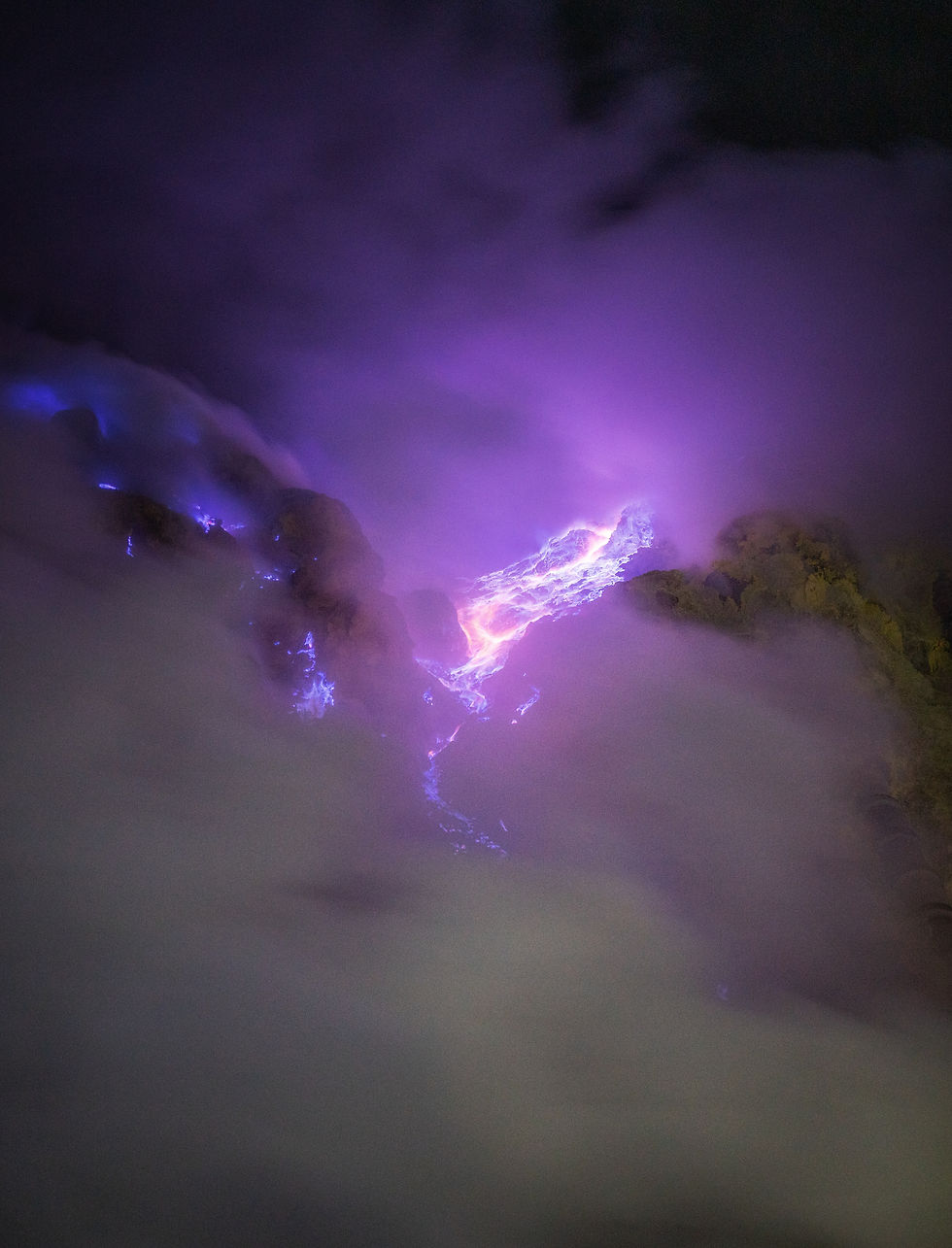
The flames are burning sulfuric gases escaping from cracks in the volcano. They glow electric blue in the darkness—surreal, otherworldly, almost impossible to believe even when you're standing right there.
Warning: The fumes are pungent. Even with gas masks, it's hard to breathe at times. Move away from the flames if it gets too intense. You can wait by the acidic blue lake for sunrise—it's less intense there.
We stayed at the lake until sunrise as it was only a few minutes anyway. Other hikers who started even earlier, made their way back up to the rim to watch the sunrise.

Sulfur mining at the Ijen crater is one of the most challenging and dangerous jobs undertaken in the world considering the terrain and the circumstances. Miners use primitive tools like crowbars and wicker baskets to collect and carry heavy sulfur loads (80-90 kgs) on their shoulders up treacherous terrains.

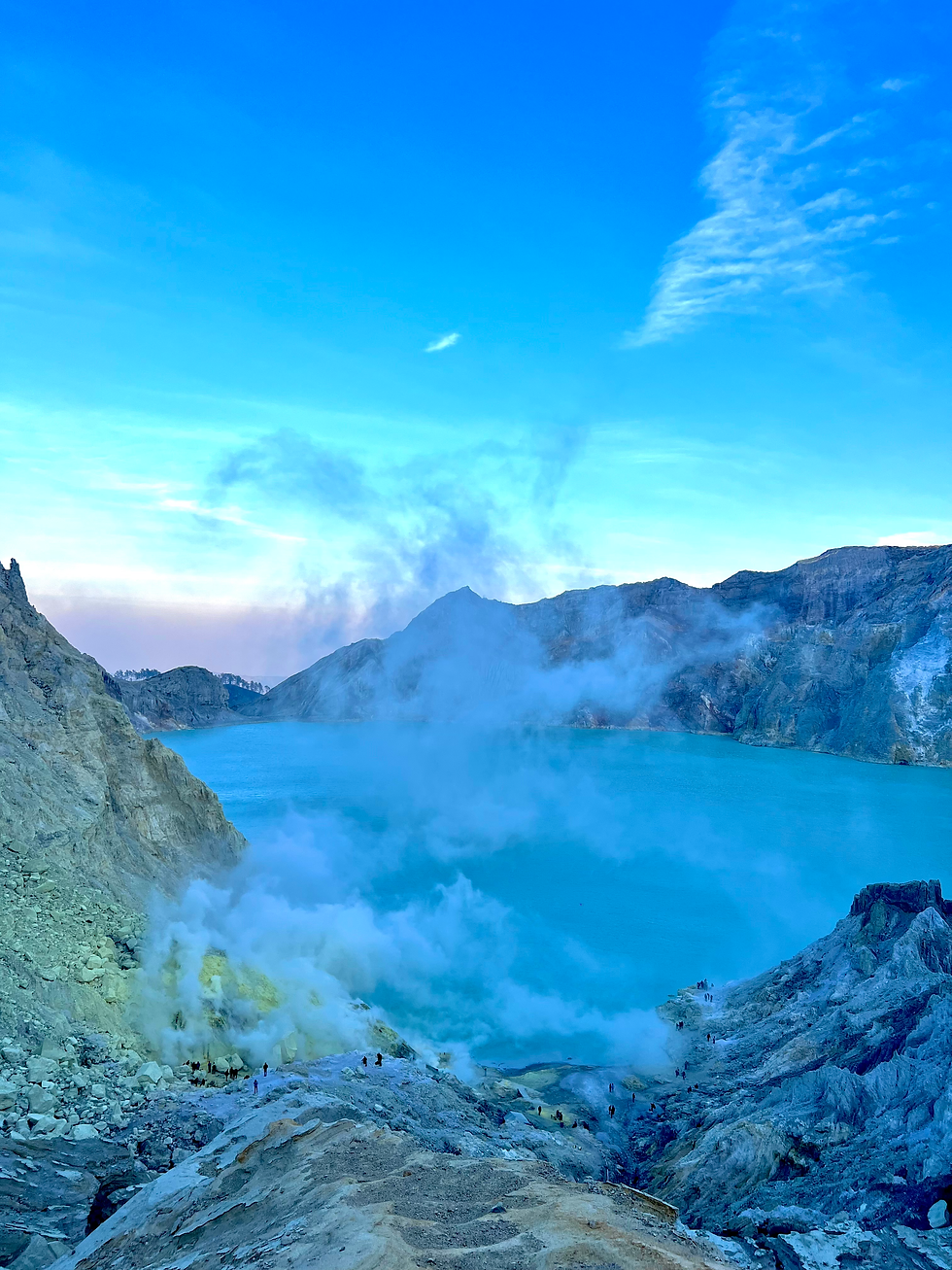
The sunrise over the turquoise crater lake is stunning. Then you hike back up—which is somehow harder than going down.
By 7am, you're back at base. Freshen up, eat breakfast, then your driver takes you to Banyuwangi Ferry.
From there? Ferry to Bali. Next adventure awaits.
❌ 5 MISTAKES TO AVOID
1. Booking Batik Airlines └─ Their flights are almost always delayed. We missed a connection because of them. Choose Garuda or Lion Air instead.
2. Skipping travel insurance └─ Volcanic hikes, steep trails, sulfur exposure. Get coverage.
3. Not bringing a face mask for Bromo/Ijen └─ The dust and sulfur fumes are no joke. Masks are cheap and essential.
4. Underestimating fitness requirements └─ Tumpak Sewu and Ijen are legitimately challenging. If you're not sure, train a bit before you go.
5. Arriving the night before without buffer time └─ Indonesian flights delay constantly. Build in buffer days.
✓ BEFORE YOU GO CHECKLIST
□ Book Borobudur/Prambanan tickets online
□ Download offline maps (service is spotty)
□ Get travel insurance with adventure coverage
□ Book overnight train Yogya → Malang
□ Set multiple alarms (3am, 1am wake-ups are brutal)
□ Pack layers—mornings are freezing, afternoons are hot
□ Bring reusable water bottle
□ Save tour operator WhatsApp numbers
📱 CONTACTS & BOOKING
TOUR OPERATOR
Semeru Malang: +62 819 4495 8936
(Hostel + Volcano circuit with Tumpak Sewu)
TRAIN BOOKING
12go.asia/en (reliable for Java trains)
TEMPLE TICKETS
Borobudhur & Prambanan : https://ticket.injourneydestination.id/en/
💡 FINAL TIPS
Logistics:
Accommodate for delays. Indonesian airlines are notoriously late. Build buffer time.
Carry cash. Many places don't take cards.
The volcano circuit is dusty. Bring a separate bag for dirty clothes.
What surprised us:
How cold it gets at altitude (we're talking see-your-breath cold)
How challenging Ijen is (hardest hike of the trip)
How friendly locals are (grandmothers waving, miners smiling despite brutal work)
What we'd do differently:
Allow an extra day in Yogyakarta (we missed Sumur Gumuling)
Book better airlines
Bring our own good headlamps for Ijen (borrowed ones were weak)
📌 SAVE THIS POST
Planning East Java? Bookmark this guide. You'll need these numbers, costs, and timings when you're actually booking.
Want more Indonesia? Check out the Complete Indonesia Travel Guide and 2-Week Itinerary.


Comments