.jpg)
Petra, Jordan: A Comprehensive Guide to the Lost City

Updated: Jan 10

Petra, the ancient Nabatean city carved into the rose-red sandstone cliffs of Jordan, has captured imaginations for centuries. Its breathtaking beauty and rich history have made it a legendary setting for movies, TV shows, and video games.
IN THIS GUIDE
├─ Why Petra Is Extraordinary
├─ Petra by Night (Should You Go?)
├─ Trail Options & What to Choose
├─ Complete Walking Guide
├─ Practical Tips & Logistics
└─ How to Plan Your Visit
Remember Indiana Jones and the Last Crusade? That thrilling chase through narrow canyons, culminating at the Treasury? That's Petra. The hidden passages, ancient secrets, unique architecture carved directly into rock—it's all real. And it's absolutely awe-inspiring.
Seeing Petra in person exceeds every expectation. This isn't just a tourist site—it's a journey through time, a physical marvel, and an adventure you won't soon forget.
PETRA IN POP CULTURE
Petra's iconic Treasury has appeared in:
Indiana Jones and the Last Crusade (1989) - The final crusade location
Transformers: Revenge of the Fallen (2009)
The Mummy Returns (2001)
Arabian Nights TV series
Countless documentaries and travel shows
But no screen can capture the feeling of walking through the Siq and seeing the Treasury emerge from the shadows. You just have to experience it!
Brief History : The Rose City
Petra was once a thriving metropolis and the capital of the Nabatean Kingdom. The Nabateans were skilled traders and merchants, controlling the lucrative spice route between the Mediterranean Sea and the Arabian Peninsula.
Why Petra's location mattered: Strategic position = control of trade routes = massive wealth = ability to carve an entire city into rock
The decline: Starting in the 1st century AD, trade routes shifted away from the region. Roman influence grew. Eventually, the Nabateans were incorporated into the Roman province of Arabia Petraea.
Rediscovery: Petra was largely forgotten until 1812, when Swiss explorer Johann Ludwig Burckhardt rediscovered it. Since then, extensive restoration efforts have been ongoing.
The hidden city: Locals believe only 20% of Petra has been excavated. The remaining 80% is still underground or hidden. Let that sink in—what you see is just a fraction of what exists.
Mind-blowing, right?
Planning Your Petra Visit
How Much Time Do You Need?
Minimum: 1 full day (what we did)
Covers main highlights
You'll be tired but satisfied
Requires good fitness
Ideal: 2 days
Day 1: Siq Trail + main sites at leisure
Day 2: Monastery Trail + Little Petra
Less rushed, more immersive
Maximum: 3 days (for completeness)
Add Petra by Night
Explore lesser-known trails
Take it slow, soak it all in
TRAIL OPTIONS
Petra is HUGE. There are multiple trails, each offering different experiences.
The three main routes:
Siq Trail (Main Trail) - The classic entrance
Monastery Trail - The back entrance, intense but rewarding
Little Petra + Shuttle - Alternative start (what we chose!)
Additional options:
High Place of Sacrifice Trail (inside main Petra)
Various shorter loops and detours

TIP: Get maps at the Visitor Center or your hotel. They're essential for navigating Petra's complex layout.
Route 1: The Siq Trail (Classic Entrance)
The Siq is the main entrance to Petra—a narrow gorge winding 1.2km (0.75 miles) through towering sandstone cliffs that culminates in the dramatic reveal of the Treasury.
This is THE iconic Petra experience you've seen in movies, Instagram reels, and travel videos.
THE EXPERIENCE
Walking through the Siq
As you walk, the sandstone cliffs change colors—deep red to golden brown, depending on light. The gorge narrows, walls tower 80+ meters above you, creating an almost otherworldly feeling.
Then suddenly, through a narrow gap, you catch your first glimpse of the Treasury. Just a sliver at first. Then more. Then—BAM—the full facade emerges in all its glory.
Trust me, no matter how many photos you've seen, nothing prepares you for that moment.

The Treasury (Al-Khazneh)
QUICK FACTS
Height: 40 meters (130 feet)
Width: 28 meters (92 feet)
Carved: 1st century AD
Purpose: Likely a royal tomb (despite the name "Treasury")
Fun fact: Locals believed it held Pharaoh's treasure (hence the name)
The Treasury's facade is adorned with intricate carvings and sculptures. The detail is stunning considering it was carved directly into the rock face over 2,000 years ago.
What you can't do: Go inside. The interior is closed to visitors (it's mostly empty anyway).
What you SHOULD do: Sit, stare, marvel. Climb to viewpoints on either side for elevated photos.
Beyond The Treasury
Most tourists stop at the Treasury and turn back. Don't be most tourists!
From the Treasury, the Siq Trail continues through the entire ancient city:
Next stops (in order):
Street of Facades (tombs carved into cliffs)
The Theatre (2,000-year-old amphitheater carved into rock)
Royal Tombs (massive facades overlooking the city)
Byzantine Church (stunning mosaic floors)
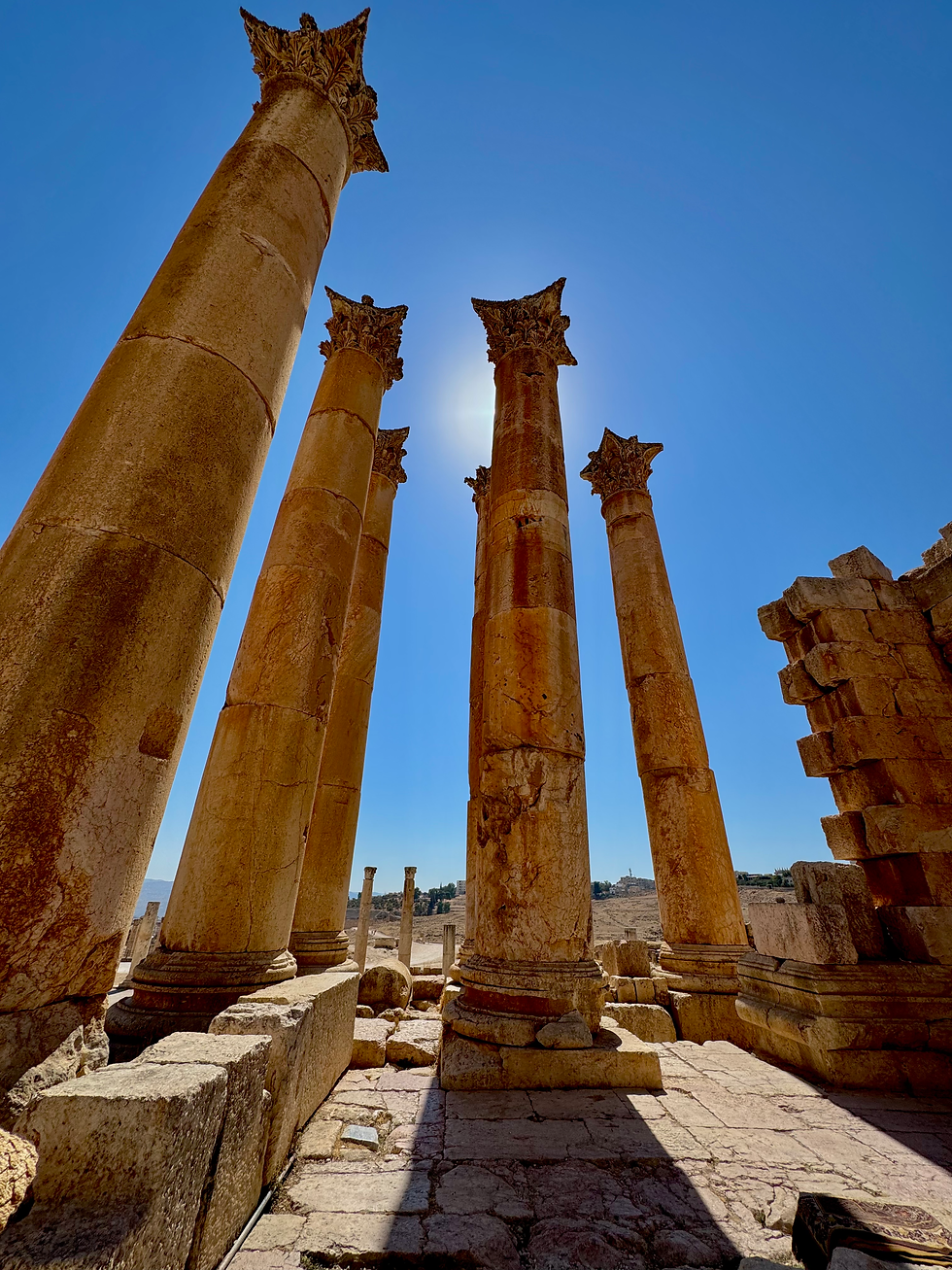
Colonnaded Street (ancient paved road with column ruins)
Great Temple (one of Petra's largest structures)
Eventually: The Monastery (if you keep going)


Total distance if you walk the full trail: 6-8km one way
Route 2: The Monastery Trail (The Challenge)
Call it the back entrance to Petra. This trail starts with 800+ rock-cut steps climbing up the mountain, with stunning views along the way, leading to Ad Deir—The Monastery.

WHY CHOOSE THIS ROUTE
Pros
Incredible views throughout the climb
The Monastery is LARGER than the Treasury (and less crowded)
You end at the Treasury (so you still get that iconic reveal)
More adventurous, less touristy feel
Cons
Physically demanding (those 800 steps are no joke!)
Takes 1-2 hours just to reach the Monastery
You're tired BEFORE exploring the rest of Petra
THE MONASTERY (Ad Deir)
QUICK FACTS
Height: 50 meters (164 feet) - BIGGER than Treasury
Width: 45 meters (148 feet)
Carved: 1st century AD
Purpose: Likely a temple or tomb
Difficulty: ⭐⭐⭐⭐ Challenging

The Monastery is absolutely magnificent—and because it requires that intense climb, it's far less crowded than the Treasury.
Stand in front of it and realize: this massive structure was carved directly into the mountain. The scale is unreal.
AFTER THE MONASTERY
After soaking in the Monastery views, you descend the 800+ steps (knees will feel this!) to the Basin area.
BASIN AREA:
Restaurant for refreshments
Bathrooms
Place to rest and refuel
From there, you walk the Colonnaded Street past several ruines on both sides off the main street.

Qasr Al-Bint
Looks like a fort, but likely a Nabatean religious site. One of the few freestanding structures (not carved into rock) still standing in Petra.
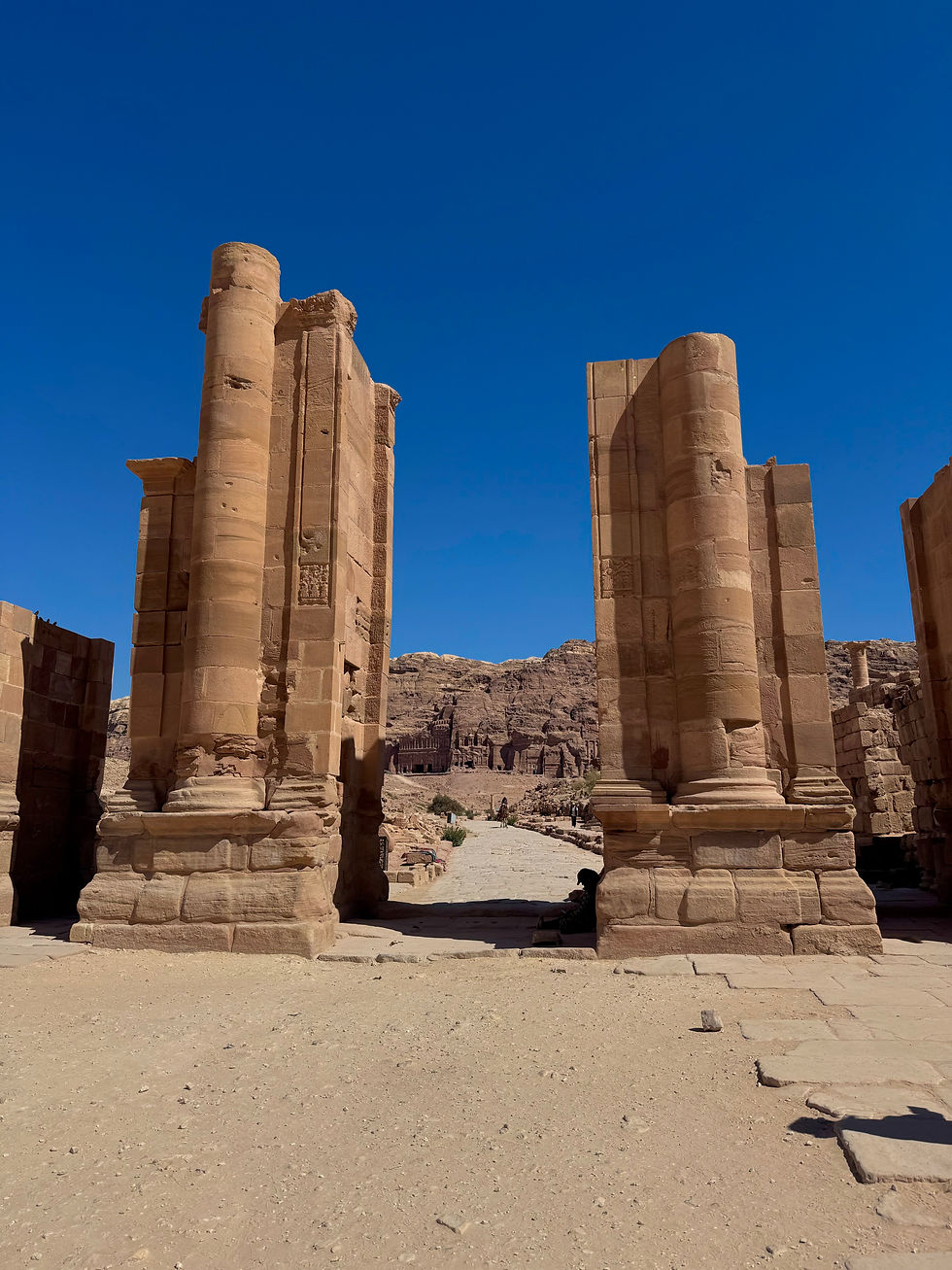
The Great Temple
One of Petra's largest structures. Its exact purpose is debated—possibly a civic center for public gatherings rather than a traditional temple.
Features:
Lower precinct with large paved courtyard
Upper precinct with main temple structure
Remains of massive columns
Even in ruins, the sheer scale conveys the grandeur of ancient Petra.

The Byzantine Church
One of Petra's hidden gems. The mosaic floors are remarkably well-preserved, depicting:
The four seasons
Real and mythological animals
Human figures
Geometric patterns
Clear evidence of a significant Christian community during the Byzantine era (5th-7th centuries AD).
TIP: The Church requires a short uphill trail. Many people skip it. Don't—the mosaics alone are worth the detour.

The Royal Tombs
Four massive tomb facades carved into the Jabal al-Khubtha mountain:
Urn Tomb: Largest courtyard, used later as a Byzantine church Silk Tomb: Named for the swirling colors in the rock Corinthian Tomb: Heavily eroded but ornate design Palace Tomb: Three-story facade resembling a Roman palace
These tombs showcase the wealth and power of Nabatean elite. Their scale and detail are breathtaking.


The Royal Tombs are a must-see attraction in Petra, offering a glimpse into the wealth, power, and architectural prowess of the Nabataean civilization.
They stand as a testament to their skill in carving monumental structures into the living rock, creating lasting monuments to their deceased leaders.

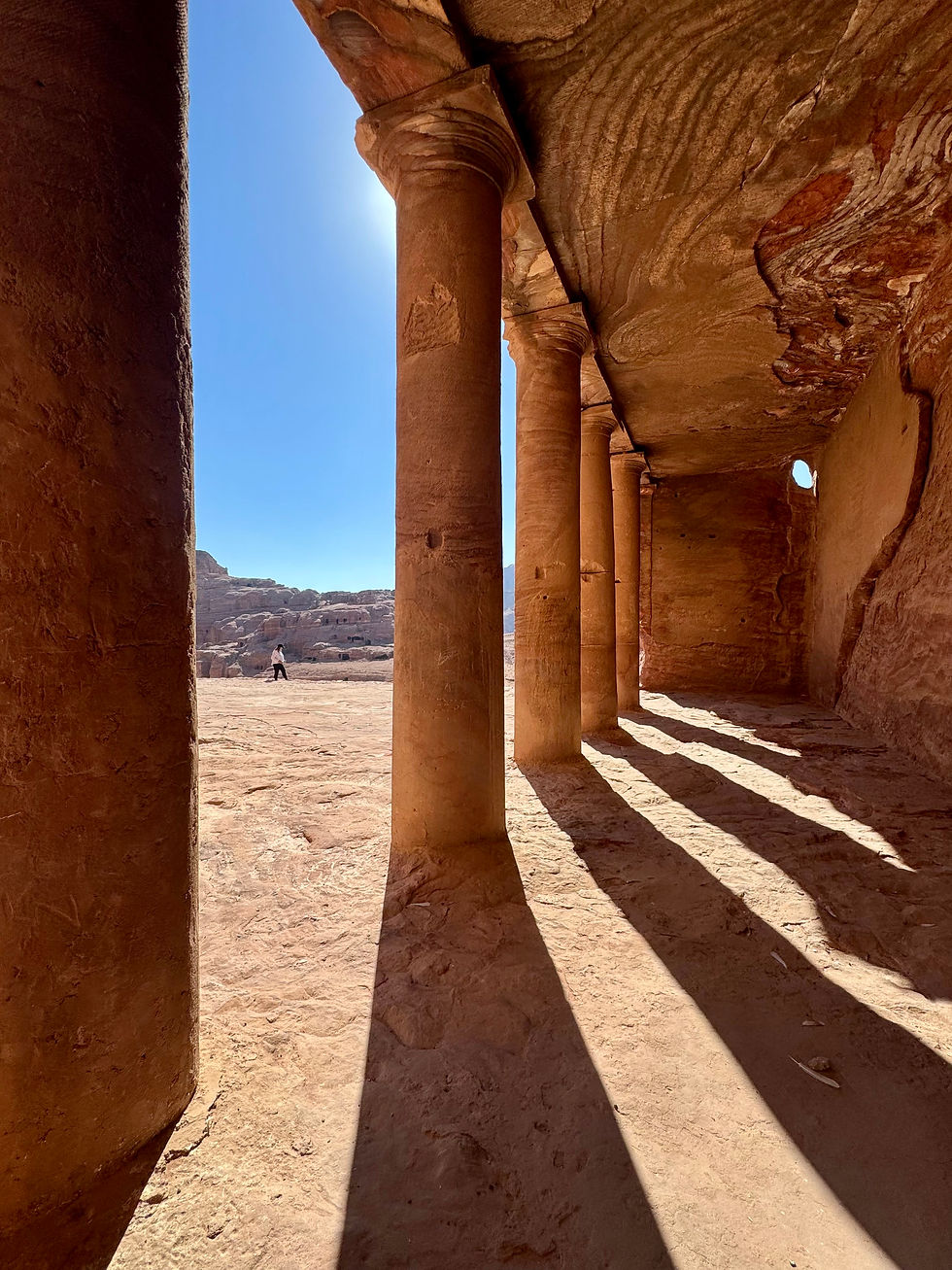
The Theatre -
It's mind-boggling how an entire city was carved in stone with such intricate planning. The circular seating for a good view, isolated entrances and exists for guests and oerformers, the stage. Unbelievebale!

Eventually: The Treasury and exit through the Siq
Total time: 5-7 hours for the full experience

The walk to the exit from the Treasury is long but a pleasant one with the iconic narrow gorge with towering cliffs on either side.
Route 3: Little Petra + Shuttle (What We Chose!)
Little Petra (Siq al-Barid, "the cold canyon") is a smaller archaeological site 8km north of main Petra. It features rock-cut tombs, temples, and houses carved into sandstone—a mini-Petra, essentially.
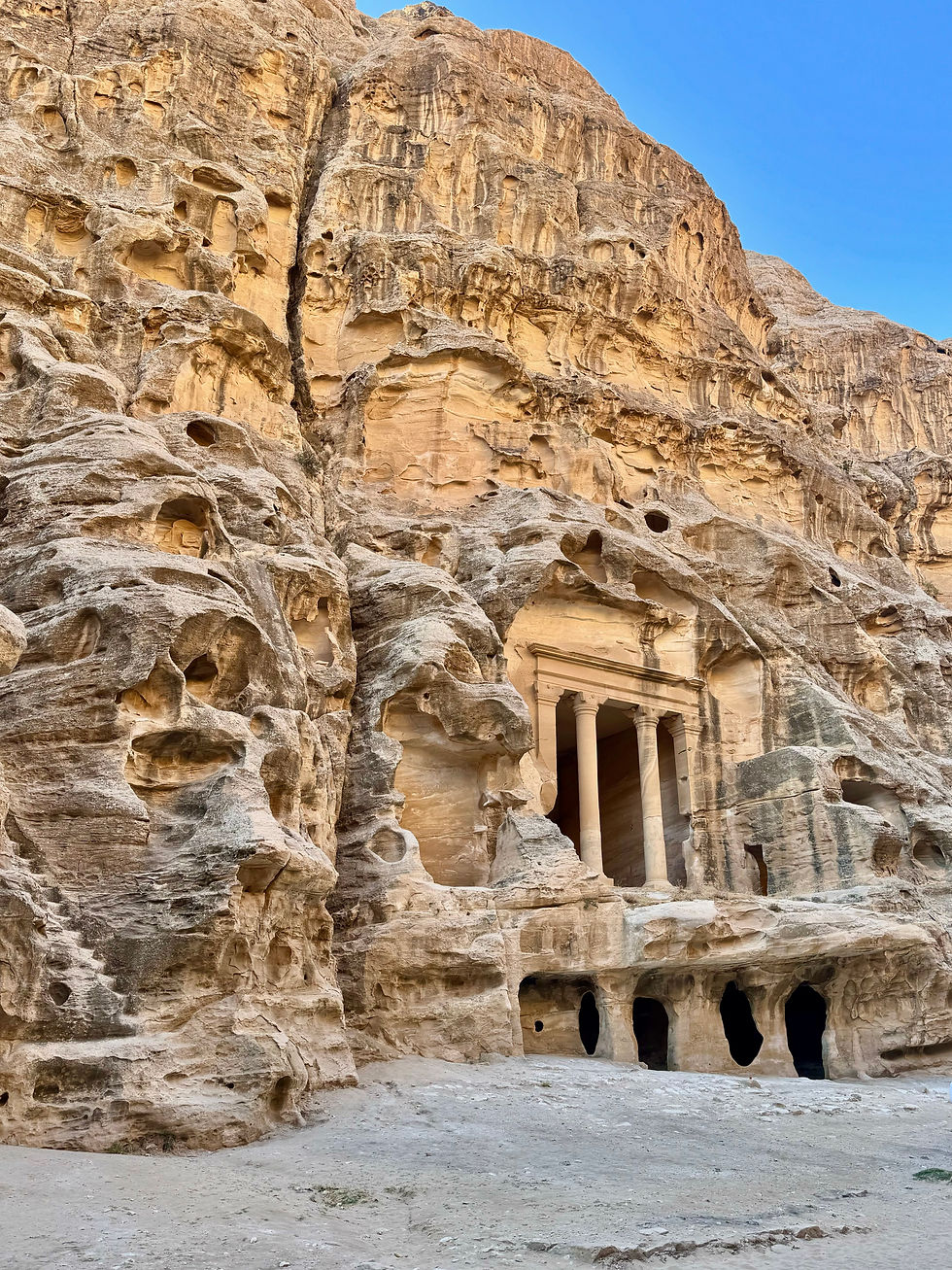
Our Route:
Explore Little Petra (1 hour)
Take the shuttle to the start of the Monastery Trail
Climb to the Monastery (1-2 hours)
Descend through main Petra to the Treasury and exit
Why We Chose This?
Pros
See Little Petra (fewer tourists, beautiful in its own right)
Avoid the most crowded Siq entrance
Still get the Monastery AND Treasury
More unique route
Cons
Requires coordination (shuttle timing)
Little Petra is separate entry (though close)
Less "classic" experience
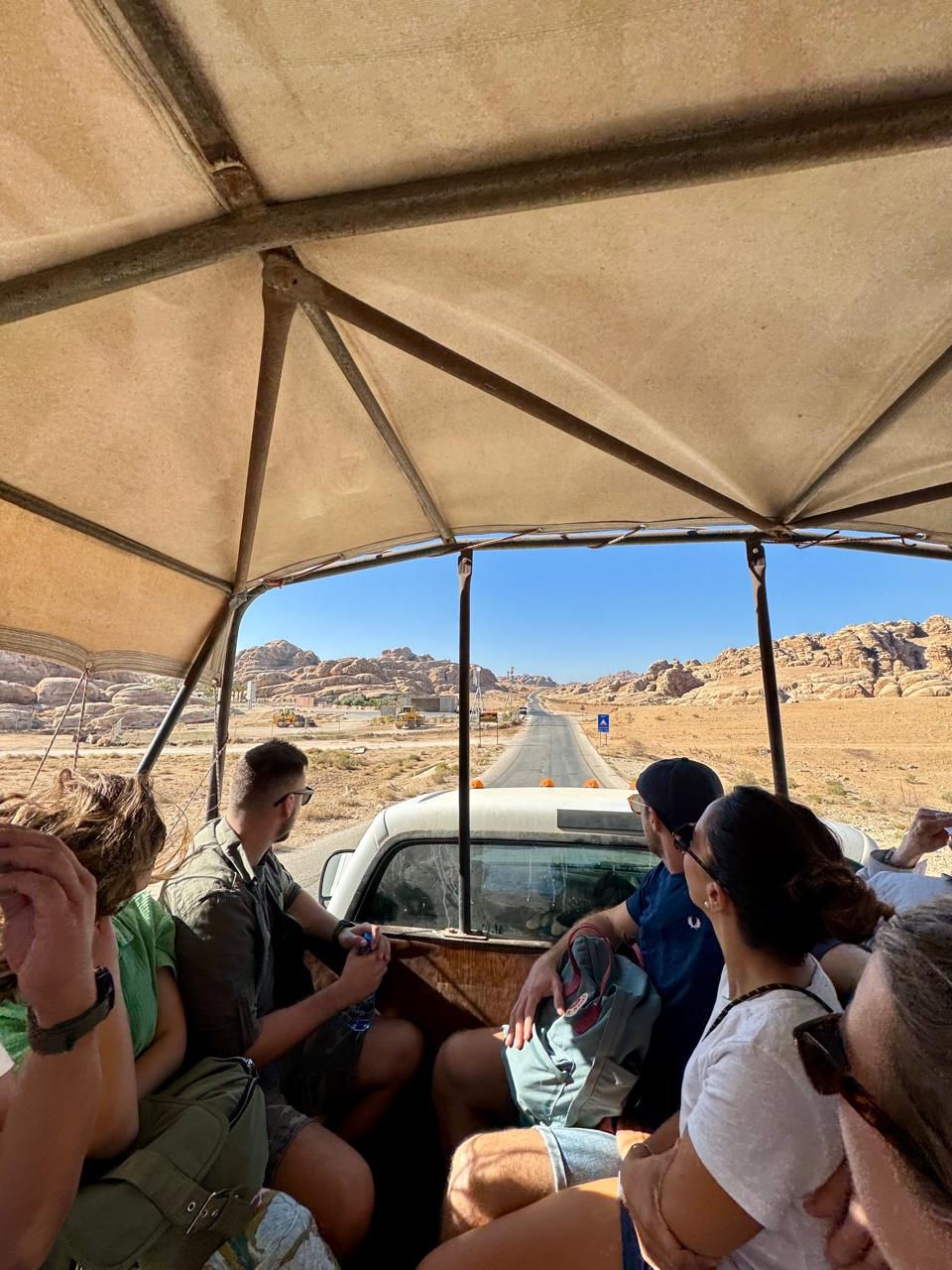
The Shuttle (Critical Info)
Shuttle Details
Route: Little Petra → Monastery Trail start
Frequency: Every 30-45 minutes (departs when full)
Cost: 10 JD per person (~$14 USD)
Purchase: At Little Petra entrance
⚠️ SCAM WARNING: Unofficial drivers will try to charge 50+ JD. The official government shuttle is ONLY 10 JD. Don't fall for it!

LITTLE PETRA HIGHLIGHTS
Painted Triclinium (dining hall with ancient frescoes)
Rock-cut dwellings
Smaller tombs and temples
Fewer tourists, peaceful atmosphere
It's worth the visit. We spent about an hour here before catching the shuttle.
You can choose to walk/hike from Little Petra to The Monastery, or take the government-organized shuttle that runs every 30 minutes from Little Petra to the start point of The Monastery hike trail.
The Complete Walking Guide
If You're Doing the Full Route (Either Direction):
From Monastery To Treasury (our route):
Little Petra (1 hour)
Shuttle to Monastery Trail start (30 min wait + 15 min ride)
Climb 800 steps to Monastery (1-2 hours)
The Monastery (30-45 min to explore and marvel)
Descend 800 steps to Basin (30-45 min)
Qasr Al-Bint (Nabatean religious site - 10 min)
Great Temple (massive civic center ruins - 15 min)
Byzantine Church Trail (uphill detour - 20 min)
Stunning mosaic floors depicting seasons, animals, humans
Evidence of significant Christian community in Byzantine era
Royal Tombs (Urn, Silk, Corinthian, Palace Tombs - 30 min)
Carved into Jabal al-Khubtha mountain
Grand facades overlooking the city
Built for Nabatean royalty and elite
The Theatre (ancient amphitheater carved into rock - 15 min)
Street of Facades (smaller tombs lining the path)
The Treasury (THE moment - 30-60 min)
Exit through the Siq (1.2km, 20-30 min)
Total time: 6-8 hours depending on pace and stops
Total distance: 12-15km (7-9 miles)
PETRA BY NIGHT: Should You Go?
Petra by Night is a two-hour candlelit experience where the entire Siq (narrow canyon) and Treasury are illuminated by over 1,500 candles. It's offered only Mondays, Wednesdays, and Thursdays.
Schedule:
Opens: 8:15 PM
Ends: 10:30 PM
Duration: ~2 hours
Cost: Not included in Jordan Pass (must purchase separately)
Our Experience (We Missed It!)
Full disclosure: We initially planned 2 nights in Petra specifically to experience Petra by Night plus a full-day tour. But due to our short Jordan stay, we couldn't make the schedule work—the nights we were in Petra didn't align with Monday/Wednesday/Thursday.
This was frustrating! If you're planning Petra, check your travel dates against Petra by Night schedule BEFORE booking everything else.
Is It Worth It?
Based on what we've heard from other travelers:
Worth it if:
You love atmospheric, romantic experiences
You're staying 2+ nights in Petra anyway
Photography isn't your main goal (candlelight doesn't photograph well)
You don't mind crowds (it's very popular)
Skip it if:
You're on a tight budget (separate cost adds up)
You only have 1 day for Petra (daytime is priority)
You prefer quieter, less touristy experiences
Your travel dates don't align
OUR RECOMMENDATION: If dates align and budget allows, do it. If not, don't stress—the daytime experience is the main event anyway.
Where to Book
Visit Petra website (official)
Your hotel/travel agent (often easier)
Visitor Center on arrival (if available)
Here's a glimpse of how Petra by night would look.

Insider Tips & Practical Info
Fitness Requirements
Be honest with yourself:
Moderate fitness: You can do the Siq Trail and main sites
Good fitness: You can add the Monastery Trail
Excellent fitness: You can do everything in one day
The Monastery Trail is genuinely challenging. 800+ steps UP, then 800+ steps DOWN. In heat. At altitude. If you're not sure, stick to the Siq Trail.
What to Bring
Essentials
Water (2-3 liters per person) - There are refill stations but bring your own
Good walking shoes (you'll be on uneven rock and sand all day)
Sun protection (hat, sunglasses, sunscreen - shade is limited)
Snacks (energy bars, fruit - food options inside are expensive)
Cash (for shuttle, donkey rides, vendors)
Helpful
Walking stick (uneven terrain, lots of stairs)
Light jacket (mornings can be cool, Siq stays shaded)
Camera (obviously!)
Jordan Pass
What it includes
Single-day Petra entry
Multiple Jordan attractions
What it doesn't include
Petra by Night (separate ticket)
Multi-day Petra passes (if staying longer)
TIP: Jordan Pass is worth it if you're visiting multiple sites in Jordan. Buy it online before arrival.
Best Time to Visit Petra
Time of day
Early morning (6-7am): Fewer crowds, cooler temperatures, best light in the Siq
Late afternoon: Softer light for photography, fewer tourists
Avoid midday: Scorching heat, harsh light, maximum crowds
Time of year
Spring (March-May): Perfect weather, wildflowers
Fall (September-November): Comfortable temperatures, clear skies
Winter (December-February): Cool but pleasant, very few tourists
Summer (June-August): HOT (35-40°C / 95-104°F) - start VERY early
We visited in October and the weather was perfect for hiking.
Common Mistakes To Avoid
1. Only seeing the Treasury and leaving └─ The Treasury is just the beginning! Most of Petra's wonders are beyond it.
2. Wearing flip-flops or fashion shoes └─ You'll be walking 10+ km on uneven rock and sand. Wear proper shoes.
3. Not bringing enough water └─ Dehydration is real. Bring at least 2 liters per person.
4. Trying to do everything in 3 hours └─ Petra requires a FULL day minimum. Plan accordingly.
5. Paying inflated prices for donkey/camel rides └─ Negotiate prices beforehand. Official rates exist—ask at the Visitor Center.
6. Skipping the Monastery because "it's too hard" └─ If you're physically able, do it. The Monastery is as impressive as the Treasury and far less crowded.
Alternative Transport Options
Donkeys, Horses & Camels
Available for:
Through the Siq to the Treasury
Up to the Monastery
Various shorter routes
Costs: Negotiate! Prices vary widely (20-50 JD depending on route)
Our take: Walking is part of the experience. But if you have mobility issues or are exhausted, animals are a viable option.
Ethics note: Animal welfare in Petra is a concern. If you ride, choose animals that look healthy and well-treated. Don't support obviously mistreated animals.
Sample Itinerary
ONE DAY IN PETRA (Intensive)
6:00 AM - Enter through the Siq (beat the crowds) 6:30 AM - Treasury (quiet photo time) 7:30 AM - Continue to Street of Facades, Theatre 9:00 AM - Royal Tombs 10:00 AM - Byzantine Church (uphill detour) 11:00 AM - Great Temple, Qasr Al-Bint 12:00 PM - Lunch at Basin Restaurant 1:00 PM - Begin Monastery Trail climb 2:30 PM - Monastery (rest, photos, marvel) 3:30 PM - Descend back to Basin 4:00 PM - Return through main path to Treasury 5:00 PM - Exit through the Siq
Total time: 11 hours Difficulty: ⭐⭐⭐⭐ Challenging but doable
TWO DAYS IN PETRA (Ideal)
Day 1
Enter through Siq
Treasury, Street of Facades, Theatre
Royal Tombs, Byzantine Church
Great Temple, Qasr Al-Bint
Leisurely exploration
Exit around 4-5 PM
Day 2
Little Petra exploration (morning)
Shuttle to Monastery Trail
Climb to Monastery
Descend through main Petra
Any sites you missed Day 1
Optional: Petra by Night on Monday/Wednesday/Thursday evening
Hiking through Petra was more than just a physical journey—it was a journey through time.
The sheer scale of the site, combined with the intricate details carved into sandstone over 2,000 years ago, left us in absolute awe. Every turn revealed something new. Every structure made us wonder: how did they do this? Why here? What was life like?
Petra exceeded every expectation. And trust me, after seeing photos for years, I had high expectations.
If you're considering Petra: Go. Just go. Whether you have one day or three, whether you're super fit or moderately active, whether you're into history or just into beauty—Petra delivers.
It's an experience you won't soon forget, and one I highly recommend to anyone seeking adventure and a connection to the past.
📌 BOOKMARK THIS GUIDE
Planning Petra? Save this guide—you'll reference it while planning your route and during your actual visit.
More Jordan Content:
Complete Jordan Travel Guide (Coming Soon)
Wadi Rum Desert Guide (Coming Soon)
Questions about Petra? Planning your Jordan trip? Drop them below. We've walked every step of that ancient city and are here to help you plan yours!



Comments